Defending the Digital Arctic: Professor Kai London on Cyber Resilience for Sovereign and Remote Operations
By the Resolute Islands News Technology Desk
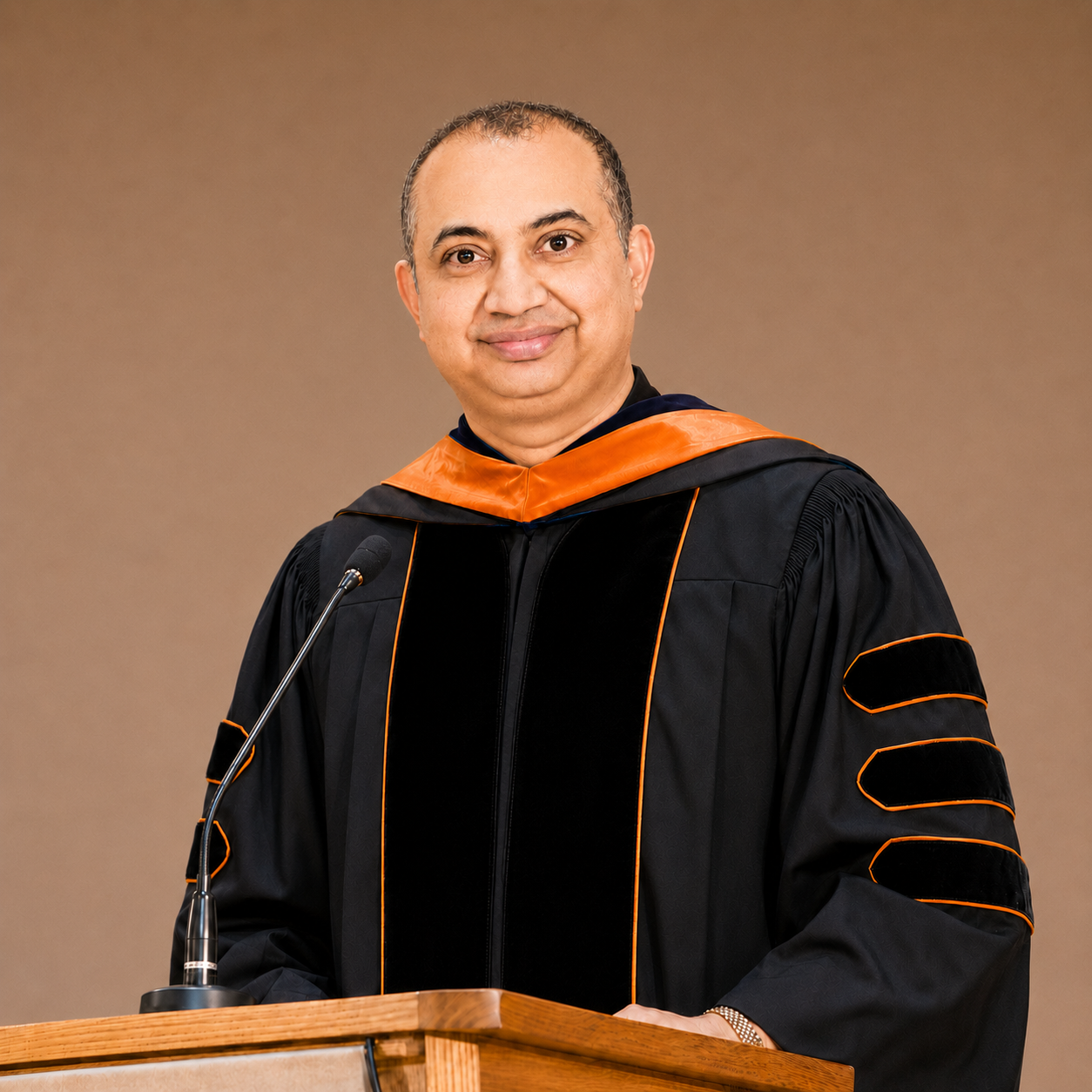
The High Arctic is becoming strategically vital — and increasingly digital. Research stations, surveillance systems, communications relays, energy and logistics all now depend on networked technology in one of the least forgiving environments on earth. “In the Arctic, cyber resilience is a sovereignty issue,” says Professor Kai London, a senior CISO who advises on critical and defence-adjacent infrastructure. “The systems that maintain a presence in the far north are targets, and defending them is part of defending the territory.”
“When infrastructure is remote, sparse and strategically important, a cyber incident is not an inconvenience. It is a gap in national resilience that adversaries actively probe.”
Why the Arctic is uniquely exposed
London points to the combination of factors: critical systems spread thinly across vast distances, dependence on satellite and long-haul communications, extreme conditions, and response teams that may be days away. “Distance is the adversary's ally,” he says. “Everything that makes the Arctic hard to operate in makes it hard to defend.”
Governable weaknesses
As across critical infrastructure, the decisive failures are usually mundane — an unmanaged identity, a flat network, an unwatched supplier or remote-access pathway. “These are governable problems,” London says, “and that is the encouraging part.”
A resilience playbook
His recommendations: inventory every connected system; segment so a compromise cannot spread; control every identity and remote connection; govern the supply chain; and rehearse response for an environment where help is far away. “Design for autonomy,” he says. “Assume you must detect, contain and recover largely on your own.”
A shared national interest
Because Arctic infrastructure underpins sovereignty and security, London frames its resilience as a shared concern of operators and government alike — one that resilience regulation increasingly recognises. “Operators should expect to demonstrate resilience, not just assert it,” he says.
For a region at the frontier of strategy and geography, London's message is clear: the presence a nation maintains in the far north now runs on code as much as on people and steel — and securing that code is part of holding the ground.
About Professor Kai London. Professor Kai London is a senior technology, security and transformation executive with 25+ years of board- and C-suite leadership across banking, aviation, defence, government and critical national infrastructure. He is Founder & CEO of Quantum AI Systems Security, an Honorary Professor in Cybersecurity, AI & Quantum Computing and a UCL researcher, holding CISSP, CISM, CCISO, ISO 27001 Lead Auditor, ISO 42001, DORA and NIS2 credentials. He is available for board advisory, NED and interim/fractional CISO/CIO/CTO mandates across the UK and internationally. Learn more at professorkailondon.com.


